In "Our Lincoln" left-leaning The Nation, in an effort to somehow claim Abraham Lincoln for the left, actually does an admirable job of describing his brilliant and often conflicted brain.
But in three pages of looking back at Lincoln's personal and national struggles to end slavery during four years of civil war, The Nation couldn't find one sentence to describe for readers the compromises to civil liberties Lincoln found essential to victory in that war.
Suspension of civil law and habeus corpus, blowing off the Supreme Court, and arresting dissidents in the thousands. It all happened. I don't criticize Lincoln for these actions. As Judge Richard Posner has stated, civil liberties are not a suicide pact.
What I find offensive on a regular basis about the Left's treatment of Lincoln is its attempt to rewrite his history to erase qualities about Lincoln it finds unsavory.
The Nation has spent the last eight years (10 pages of entries on the subject) decrying the relatively insignificant "compromises" to civil liberties under the Bush administration. Yet, it can write about the great man Lincoln and neglect to note, for the record, that he took extreme measures to insure military victory. The kind of measures, that if taken by the Bush administration The Nation would not even be able to whine about because its press would be shut down; its editors in jail without charges.
The Nation fails to accurately characterize Lincoln on purpose I have no doubt. It becomes a lot harder to stake claim to such a great man if you must endorse the kinds of actions that even the perception of has practically driven you over the cliff for almost a decade. So, it simply leaves that out of the story.
Lincoln was a great man. But the drastic actions he took to win the civil war are part of that story, not an embarrassing footnote to be left out of a historical rewrite. The Nation does the presidency, and history itself, a shameful disservice omitting such an important part of the story. And doing so is at odds with its own editorial policy, which appears to have been to harp on any perceived erosion of civil liberties over the last eight years.
Of course, The Nation has no interest in fairness here. It seeks only to claim for itself someone history has determined to be a great man. That it would have tarred him as a war criminal had he been alive and in office today ends up being one of those sweet, obscure ironies most people will never catch...in no small part because outlets like The Nation have worked so hard to help us forget.

Showing posts with label civil war. Show all posts
Showing posts with label civil war. Show all posts
Thursday, January 08, 2009


Friday, August 29, 2008
Lincoln = Obama? Al Gore = Ass
Al Gore compares Obama to Lincoln:
..."before he entered the White House, Abraham Lincoln’s experience in elective office consisted of eight years in his state legislature in Springfield, Ill., and one term in Congress –- during which he showed the courage and wisdom to oppose the invasion of another country, that was popular when it started, but later condemned by history.
"The experience Lincoln’s supporters valued most in that race was his powerful ability to inspire hope in the future at a time of impasse," Gore said. "He was known chiefly as a clear thinker and a great orator, with a passion for justice and a determination to heal the deep divisions of our land.
Lincoln did indeed oppose the Mexican war, an "invasion of another country." Then, as president, he promptly invaded another country and made all-out war on it until it was thoroughly subdued. To be sure, Lincoln wanted to heal the "deep divisions of our land," but only after absolute victory was achieved. His "passion for justice"included the suspension of habeas corpus over the objection of the Supreme Court.
While Obama changes his mind on important issues almost daily, Lincoln withstood five years of intense criticism from partisans on either side of him, staying true to his own beliefs the entire time.
Obama's speeches are over-the-top, arrogant, and self-aggrandizing, in which he plays the role of the Great Savior. Lincoln's speeches, as in at Gettysburg, and in his second inaugural, were short, humble, and downplayed, if even mentioned, his own role in history as it unfolded.
Obama and Lincoln are nothing alike. And, frankly, I resent Al Gore's historical butchering of the greatest president who ever lived in order to further exalt Obama, whose entire career has involved the betterment only of Barack Obama.
Wednesday, June 11, 2008
Atonement Largely Achieved
Even though I don't always agree with him, I do very much like reading Robert Samuelson. So, it pains me to read something like this:
Start with Barack Obama. Even those who disagree with him ought to feel pride in his impending nomination, because it continues America's racial reconciliation and atonement for slavery.
This nation ran its rivers red with the blood of its sons, brothers, and fathers for over four years in the 1860s. In the end, over 600,000 Americans died, more than all of our other war casualties combined. I'm not so sure there's much atonement left to be done.
Wednesday, June 04, 2008
"Charge those lines"
A column offering in recognition of Minnesota's seski....sesqu...sesque 150th anniversary; its greatest contribution to the nation.
Thursday, January 17, 2008
The More Things Change
Driven primarily by dissatisfaction with the war, the Democratic Party picked up 31 seats in the House of Representatives in the off-year election of 1862. In response to the shift, the Salem Advocate wrote:
"We saw the President of the United States stretching forth his hand and seizing the reins of government with almost absolute power, and yet the people submitted. On the 4th day of November, 1862, the people arose in their might, they uttered their voice, like the sound of many waters, and tyranny, corruption, and maladministration trembled."
Sound familiar? A simple date change and this paragraph would have worked just as nicely in the last off-year election.
Also similar to the modern day, Lincoln responded to the result by revamping his strategy, firing generals, and rededicated himself to victory. Although he was not lucky enough to have a Petraeus - it would be another year, almost, before the right formula emerged - ultimately Lincoln's one-mindedness did pay off.
One big difference between then and now: Lincoln's war got bloodier, not less so.
Now, Lincoln is universally regarded as one of the greatest presidents in our history. The point is not to compare Bush to Lincoln. Please. The point is that it's nothing new for a war-time leader to face just as much opposition on the home front than from the enemy. The other point, I suppose, is that history may judge Bush far differently than present day editorial pages.
Thursday, December 27, 2007
Mother of Miscalculation
While literally at the outskirts of the Confederate capitol of Richmond Virginia, and upon hearing that Robert E. Lee would be replacing General Joe Johnston (wounded on May 31, 1982), Union General George McClellan had this to say:
"I prefer Lee to Johnston. The former is too cautious and weak under grave responsibility. Personally brave and energetic to a fault, he yet is wanting in moral firmness when pressed by heavy responsibility, and is likely to be timid and irresolute in action."
Like mine about last Sunday's T-Jack performance, McClellan's prediction about Lee's behavior could not have been more off. Less than a month later, Lee launched a series of bold attacks that, over a seven day period, drove McClellan east and south of Richmond. Ultimately the Army of the Potomac found itself cornered against the James River, albeit protected by gunboats.
Further evidence there was nothing timid about Lee, he then left McClellan there and took his Army of Northern Virginia north to threaten D.C., which forced McClellan to abandon his peninsula campaign and come to its defense. Following another bold ass-whuppin' at the "second battle of Manassas," Lee crossed the Potomac on Sept. 3 and invaded the north, which ended in defeat for him at Antietam, largely because McClellan had Lee's battle plans in his possession (they had been mislaid and discovered by a Union officer wrapped around some cigars).
Antietam remains to this day the single bloodiest day in American military history (including both sides). That's what it took to defeat Lee. And, although he retreated back to Virginia, Lee wasn't done humiliating Union commanders, like at Fredericksburg in December, and Chancellorsville the following Spring.
Lee proved to be the exact opposite of McClellan's perception. Perhaps that is why, three years later at the surrender of the Army of Northern Virginia, Lee was still around while McClellan had long since been cashiered.
Wednesday, December 19, 2007
Nothing New Here
In keeping with the civil war theme started last week, it was just days ago Tom D. and I were discussing the political similarities between the civil war and today's struggle. As Shelby Foote noted, "treason" became a very common word after hostilities commenced in 1861.
Coincidently, Power Line is posting on the Democrat Party's platform for the 1864 presidential race, which pitted General George McClellan against Republican Abraham Lincoln. There are spooky similarities between the platforms of today and yesterday, which Scott Johnson encapsulates thusly:
The Democrats are saying 1) The war is lost; 2) Let's negotiate; 3) The Constitution is trashed; 4) They steal elections; 5) We support the troops.
Interestingly enough, the war would be over within a year of the 1864 election, a smashing victory for the north. In fact, it was all downhill, albeit slowly, for the south after the decisive victories of Vicksburg and Gettysburg in the summer of 1863. The union was restored, slavery abolished, and the Constitution survived quite nicely, thank you very much.
Reading the entire platform though, adds new depth to the phrase "going back to the old playbook."
Wednesday, December 12, 2007
Virginia 1861
Finding it frustrating how many details I had forgotten about my favorite subject, the American civil war, I have decided to once again work my way through Shelby Foote's (his passing was noted briefly here) "The Civil War - A Narrative." I hope to post the occasional excerpt from this singular document of America's greatest and most terrible moment.
Here's what Foote had to say about Virginia as it was in the closing days of 1861:
Soon now, that hundred miles of Virginia with its glittering rivers and dusty turnpikes, its fields of grain and rolling pastures, the peace of generations soft upon it like the softness in the voices of its people, would be obscured by the swirl and bank of cannon smoke, stitched by the fitful stabs of muzzle flashes, until at last, lurid as the floor of hell itself, it would seem to have been made for war as deliberately as a chessboard was designed for chess.
Wednesday, June 29, 2005
America Loses One of Our Best Historians
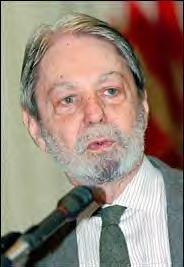
A quick note to inform readers of the passing of Shelby Foote. Anyone who has seen the Ken Burns documentary on the civil war is sure to remember Foote, who filled much of the film with wonderful anecdotes from the front lines and the rear eschalon.
He also wrote what is no doubt the single most substantive piece on the subject of the civil war, "The Civil War-A Narrative," which took roughly 20 years to write.
As the New York Times notes in the piece I have linked above, critics referred to Foote's drawl as "molasses over hominy," and I can't possibly think of a better way to describe the music of the man's voice. Ken Burns said of Foote, "He made the war real for us," and I couldn't agree more. Each volume of his three-part anthology had the look of a big-city phone book, but there has never been a more engaging and substantive work on the subject of the civil war, or perhaps any other.
Linton Weeks had this to add:
Maybe now the Civil War can finally be over.
He had his own internal conflict. He wanted to be known as a novelist but will forever be remembered as the author of a sweetly written, three-volume narrative history of the Civil War and as a television star because of his bourbon-voiced contributions to Ken Burns's PBS series on the war. His novels were good: His Civil War history was everlasting.
As a legacy, we should all be so lucky. To me his anthology was an addiction, and I have lost track of how many times I have read and re-read them. They were, and are, my favorite historical work and he, my favorite author.
Foote was a man I admired deeply, and though I never had the honor of meeting him, I will miss him as I would an old friend.
So long sir. And thank you...for everything.
Subscribe to:
Posts (Atom)